Smart Planner Consolidation and Optimization within the Shiji Ecosystem

EXECUTIVE SUMMARY

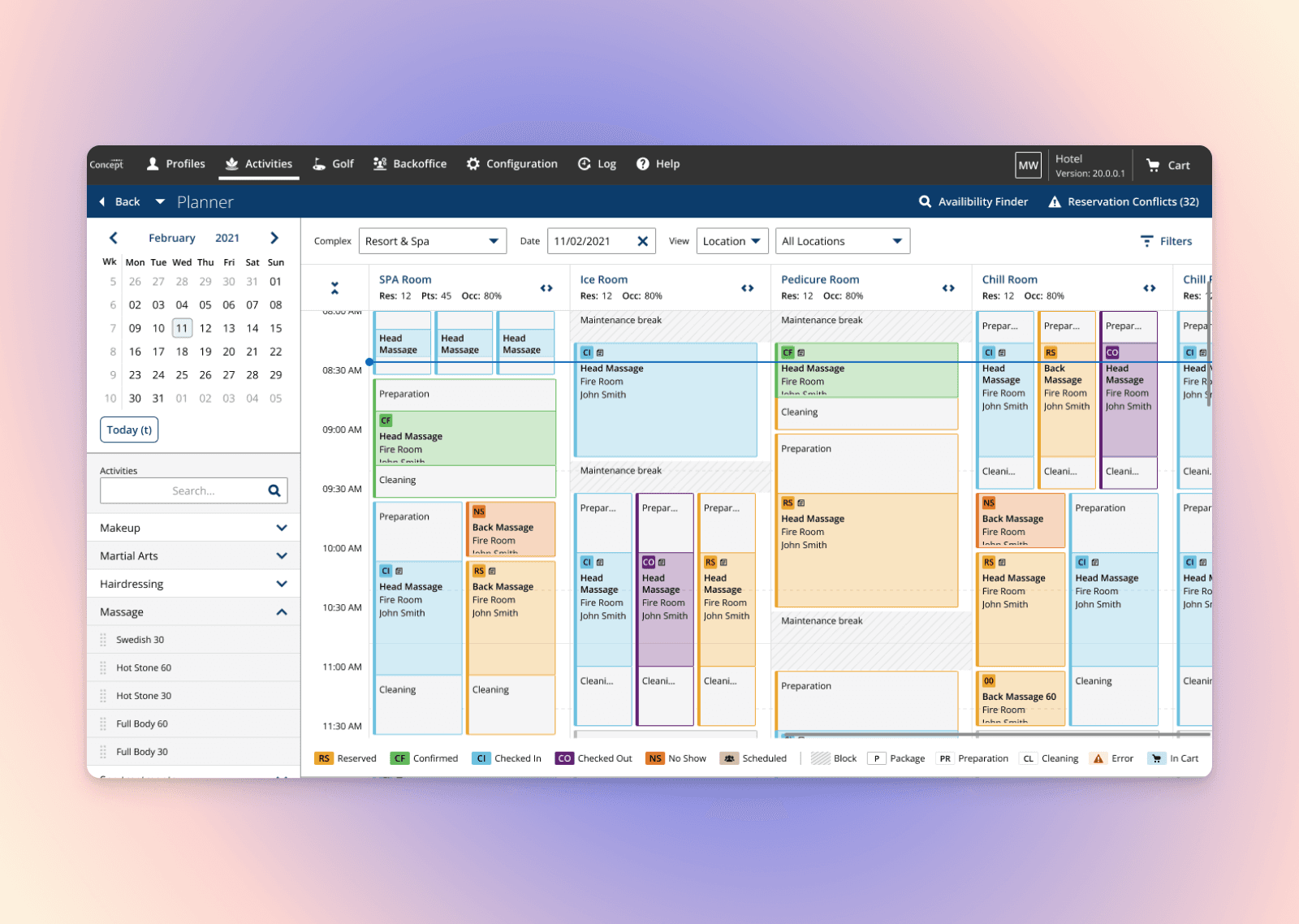
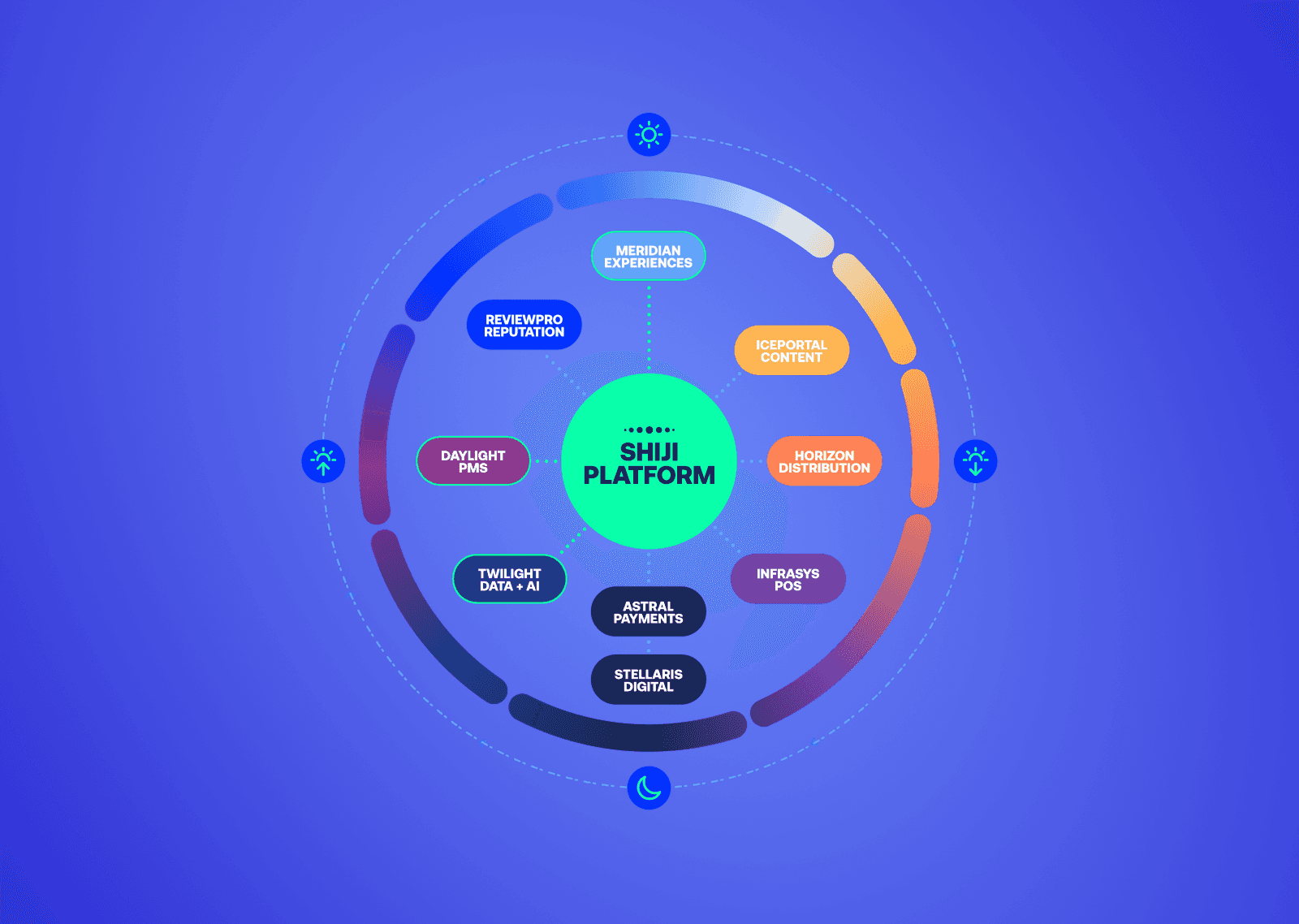
As a UX Designer, I participated in the strategic migration of the Meridian Experiences platform (formerly Concept) into the Shiji ecosystem. My primary objective was to transform fragmented legacy booking tools into a unified reservation system. I focused on designing a high-density Activities Multi-module Planner (integrating Spa and recreational services) and a dedicated Golf module. The goal was to ensure data consistency within an expanded guest profile to drive cross-selling opportunities and eliminate operational inefficiencies.
YEAR

2021

ROLE

Senior UX/UI DESIGNER

SERVICES

Enterprise UI/UX Design
Design System Integration
Legacy-to-Cloud Migration UX
Workflow Optimization

The Challenge

The legacy infrastructure relied on isolated modules, which prevented staff from having a holistic view of the guest journey.

Data Fragmentation:
A lack of seamless information flow between Spa bookings and other recreational activities.

Time Inefficiency:
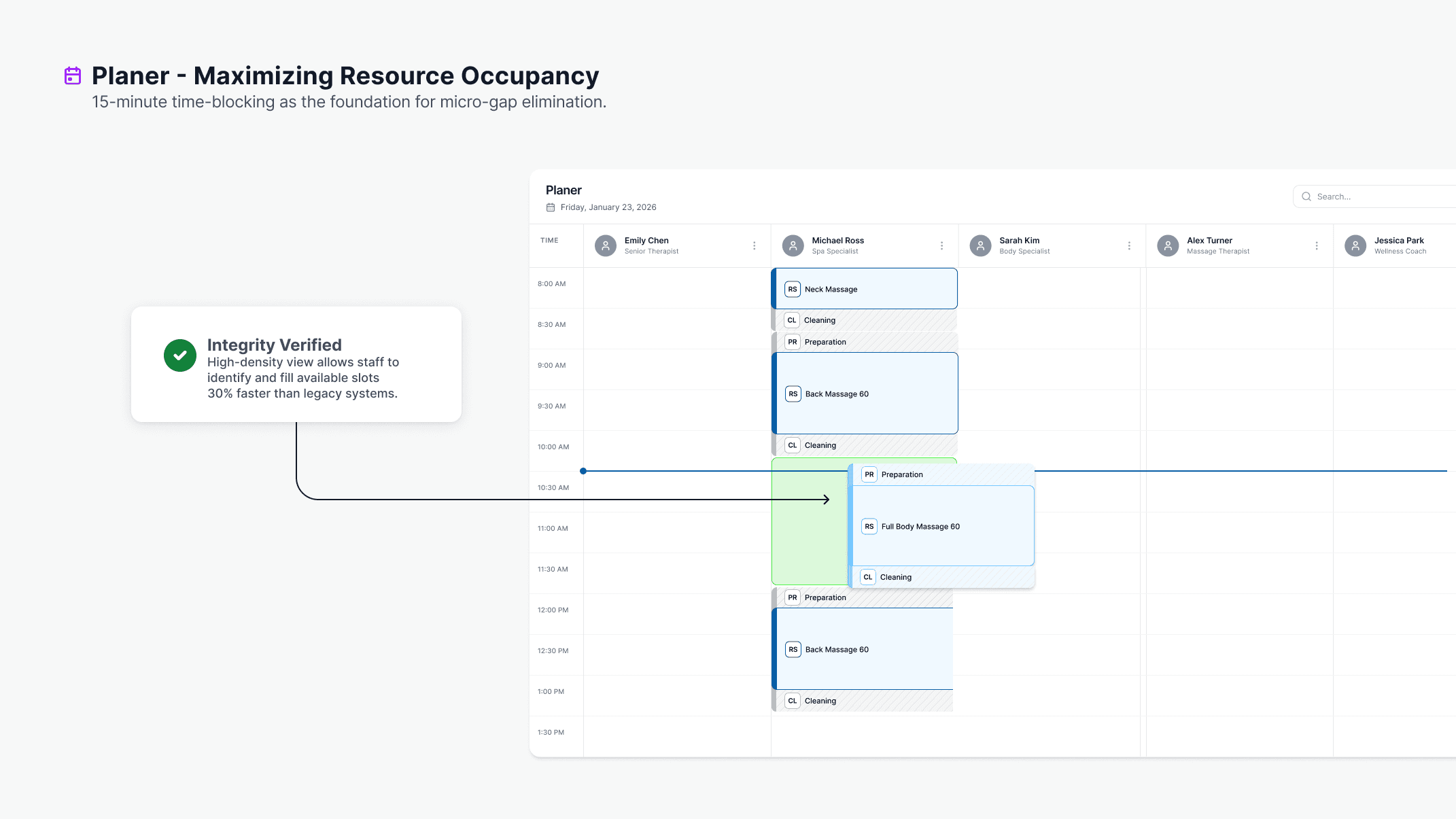
The occurrence of "micro-gaps" (unproductive time slots) in treatment schedules that were difficult to identify in the general view.

Business Objective:
To develop high-density tools that maximize resource occupancy and streamline upselling from a single guest profile.

The Process

The design execution focused on two core areas:

Activities Multi-module Planner:
I designed a unified planner integrating Spa and recreational services. I implemented Defensive Design principles, such as visual constraints (e.g., zebra patterns) that signal sub-optimal scheduling before a reservation is finalized. I also automated service buffers, such as room turnover time, to reduce human calculation errors.

Dedicated Golf Module:
Due to the specific nature of tee time bookings, the Golf module remained a separate tool but was functionally integrated into the new ecosystem. I optimized the availability view to accelerate the handling of recurring reservations.

Unified Guest Profile:
I expanded the guest profile to aggregate reservations from all modules. This became the foundation for effective cross-selling strategies.

Validation

The project was verified in collaboration with Technical Leads and Subject Matter Experts:

Consistency Audit:
Verifying that reservation data from separate modules correctly aggregates within the guest profile.

Performance Review:
Confirming that the high data density of the new planner allows for faster staff reaction times compared to legacy systems.

Constraint Logic:
Validating that visual schedule markers effectively prevent gaps without hindering operational flexibility.

The outcome

Maximizing Occupancy:
The system actively assists in eliminating unproductive gaps within the Activities planner.

Increased Sales Potential:
Full visibility of the guest schedule allows staff to efficiently offer complementary services.

Scalability:
The transformation of legacy modules into the modern Shiji ecosystem prepared the platform for future expansion and further service integrations.

Smooth Scroll
This will hide itself!

Smart Planner Consolidation and Optimization within the Shiji Ecosystem

EXECUTIVE SUMMARY

As a UX Designer, I participated in the strategic migration of the Meridian Experiences platform (formerly Concept) into the Shiji ecosystem. My primary objective was to transform fragmented legacy booking tools into a unified reservation system. I focused on designing a high-density Activities Multi-module Planner (integrating Spa and recreational services) and a dedicated Golf module. The goal was to ensure data consistency within an expanded guest profile to drive cross-selling opportunities and eliminate operational inefficiencies.
YEAR

2021

ROLE

Senior UX/UI DESIGNER

SERVICES

Enterprise UI/UX Design
Design System Integration
Legacy-to-Cloud Migration UX
Workflow Optimization

The Challenge

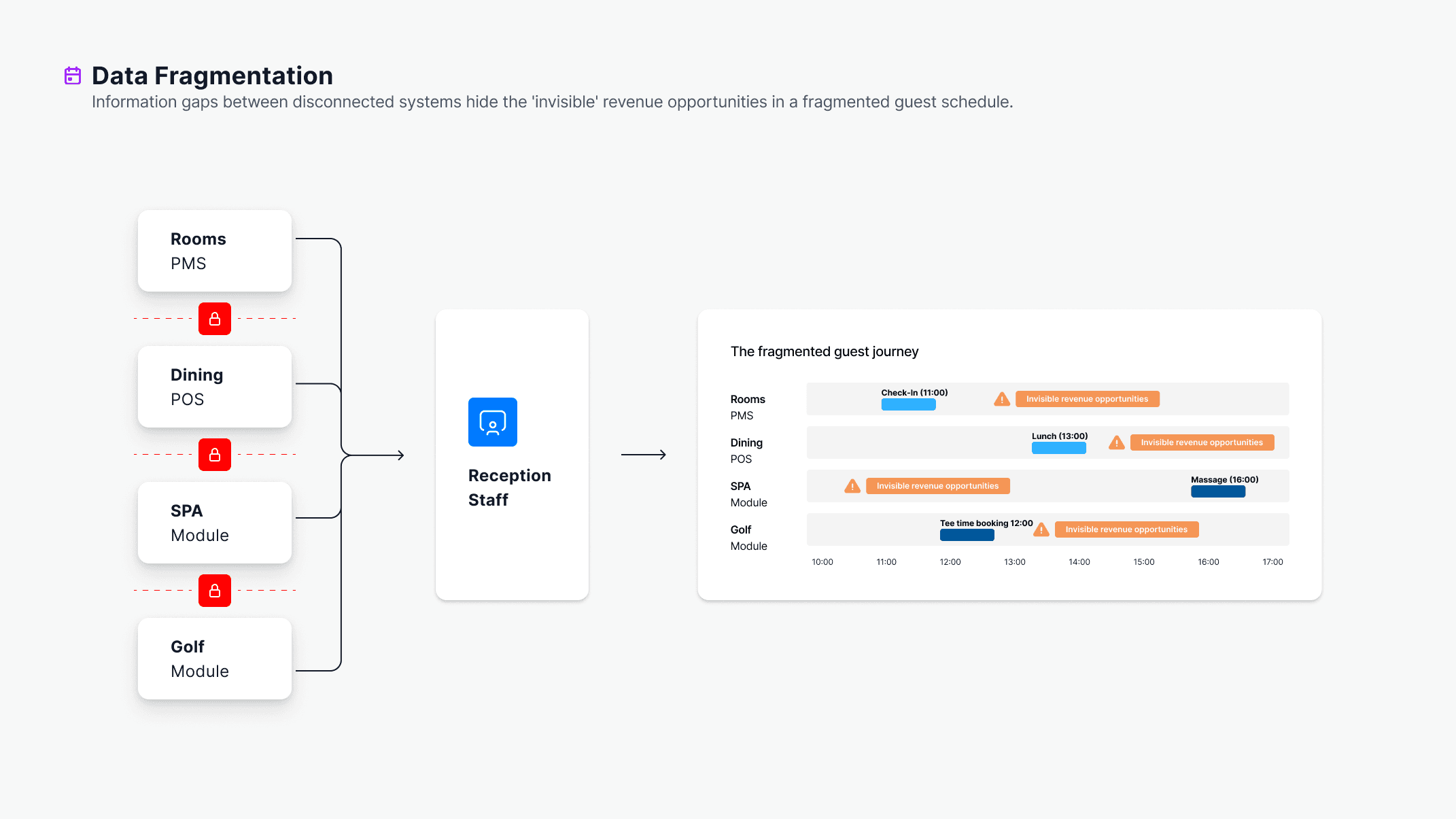
The legacy infrastructure relied on isolated modules, which prevented staff from having a holistic view of the guest journey.

Data Fragmentation:
A lack of seamless information flow between Spa bookings and other recreational activities.

Time Inefficiency:
The occurrence of "micro-gaps" (unproductive time slots) in treatment schedules that were difficult to identify in the general view.

Business Objective:
To develop high-density tools that maximize resource occupancy and streamline upselling from a single guest profile.

The Process

The design execution focused on two core areas:

Activities Multi-module Planner:
I designed a unified planner integrating Spa and recreational services. I implemented Defensive Design principles, such as visual constraints (e.g., zebra patterns) that signal sub-optimal scheduling before a reservation is finalized. I also automated service buffers, such as room turnover time, to reduce human calculation errors.

Dedicated Golf Module:
Due to the specific nature of tee time bookings, the Golf module remained a separate tool but was functionally integrated into the new ecosystem. I optimized the availability view to accelerate the handling of recurring reservations.

Unified Guest Profile:
I expanded the guest profile to aggregate reservations from all modules. This became the foundation for effective cross-selling strategies.

Validation

The project was verified in collaboration with Technical Leads and Subject Matter Experts:

Consistency Audit:
Verifying that reservation data from separate modules correctly aggregates within the guest profile.

Performance Review:
Confirming that the high data density of the new planner allows for faster staff reaction times compared to legacy systems.

Constraint Logic:
Validating that visual schedule markers effectively prevent gaps without hindering operational flexibility.

The outcome

Maximizing Occupancy:
The system actively assists in eliminating unproductive gaps within the Activities planner.

Increased Sales Potential:
Full visibility of the guest schedule allows staff to efficiently offer complementary services.

Scalability:
The transformation of legacy modules into the modern Shiji ecosystem prepared the platform for future expansion and further service integrations.

Smooth Scroll
This will hide itself!

Smart Planner Consolidation and Optimization within the Shiji Ecosystem

EXECUTIVE SUMMARY

As a UX Designer, I participated in the strategic migration of the Meridian Experiences platform (formerly Concept) into the Shiji ecosystem. My primary objective was to transform fragmented legacy booking tools into a unified reservation system. I focused on designing a high-density Activities Multi-module Planner (integrating Spa and recreational services) and a dedicated Golf module. The goal was to ensure data consistency within an expanded guest profile to drive cross-selling opportunities and eliminate operational inefficiencies.
YEAR

2021

ROLE

Senior UX/UI DESIGNER

SERVICES

Enterprise UI/UX Design
Design System Integration
Legacy-to-Cloud Migration UX
Workflow Optimization

The Challenge

The legacy infrastructure relied on isolated modules, which prevented staff from having a holistic view of the guest journey.

Data Fragmentation:
A lack of seamless information flow between Spa bookings and other recreational activities.

Time Inefficiency:
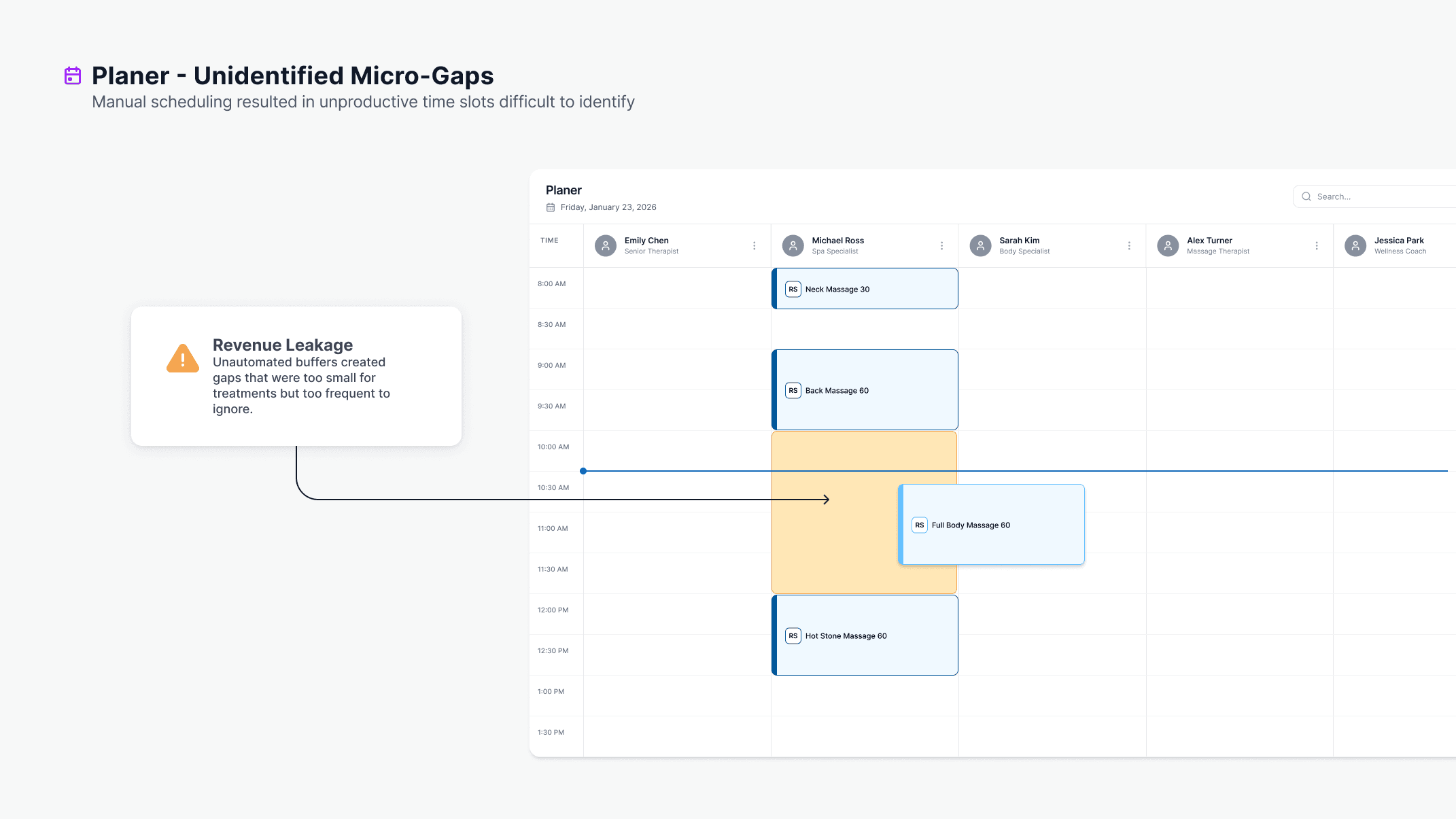
The occurrence of "micro-gaps" (unproductive time slots) in treatment schedules that were difficult to identify in the general view.

Business Objective:
To develop high-density tools that maximize resource occupancy and streamline upselling from a single guest profile.

The Process

The design execution focused on two core areas:

Activities Multi-module Planner:
I designed a unified planner integrating Spa and recreational services. I implemented Defensive Design principles, such as visual constraints (e.g., zebra patterns) that signal sub-optimal scheduling before a reservation is finalized. I also automated service buffers, such as room turnover time, to reduce human calculation errors.

Dedicated Golf Module:
Due to the specific nature of tee time bookings, the Golf module remained a separate tool but was functionally integrated into the new ecosystem. I optimized the availability view to accelerate the handling of recurring reservations.

Unified Guest Profile:
I expanded the guest profile to aggregate reservations from all modules. This became the foundation for effective cross-selling strategies.

Validation

The project was verified in collaboration with Technical Leads and Subject Matter Experts:

Consistency Audit:
Verifying that reservation data from separate modules correctly aggregates within the guest profile.

Performance Review:
Confirming that the high data density of the new planner allows for faster staff reaction times compared to legacy systems.

Constraint Logic:
Validating that visual schedule markers effectively prevent gaps without hindering operational flexibility.

The outcome

Maximizing Occupancy:
The system actively assists in eliminating unproductive gaps within the Activities planner.

Increased Sales Potential:
Full visibility of the guest schedule allows staff to efficiently offer complementary services.

Scalability:
The transformation of legacy modules into the modern Shiji ecosystem prepared the platform for future expansion and further service integrations.

Smooth Scroll
This will hide itself!